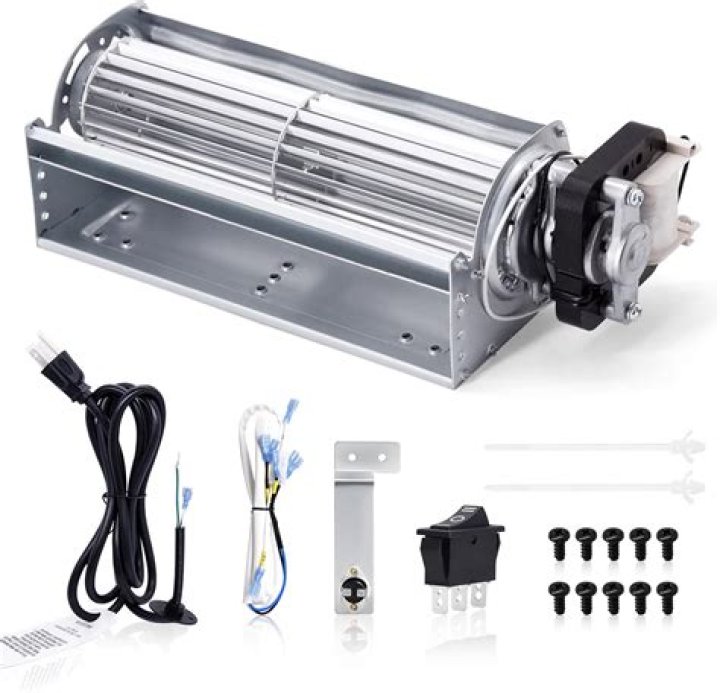
A motor controller is a device or set of devices that help in regulating the manner in which a motor works. … The controller is also able to engage the motor into forward or reverse rotation as well as regulating and limiting the rotary speed, torque, and protecting against electrical fails and overloads.
What are 3 types of motor control?
There are four basic motor controller and drive types: AC, DC, servo, and stepper, each having an input power type modified to the desired output function to match with an application.
Why are motor controllers used?
Motor controllers can be used to gradually start or increase the speed of a motor, increase torque, or reverse rotational direction of the motor. They can also be used to reduce cost by using smaller wire and reduced-amperage devices to control the motor.
What is motor control example?
An example of fine motor control is picking up a small item with the index finger (pointer finger or forefinger) and thumb. The opposite of fine motor control is gross (large, general) motor control. An example of gross motor control is waving an arm in greeting.What are the elements of motor control?
- Disconnect/Cam Switches.
- Temperature Control Devices.
- Circuit Breakers.
- Custom Engineered Products.
What is motor control OT?
Motor Control is defined by Jane Case-Smith as how the central nervous system organises and quantifies movement, but also the nature of the movement. Therapist`s can assist in understanding the mechanisms, strategies, development and the motor dysfunction component of the movement.
What type of control system is the motor system?
Motor control is the regulation of movement in organisms that possess a nervous system. … To control movement, the nervous system must integrate multimodal sensory information (both from the external world as well as proprioception) and elicit the necessary signals to recruit muscles to carry out a goal.
How does a motor work?
How do motors work? Electric motors work by converting electrical energy to mechanical energy in order to create motion. Force is generated within the motor through the interaction between a magnetic field and winding alternating (AC) or direct (DC) current.How does motor control and motor learning works?
The person, the task, and the environment interact to in uence motor behavior and learning. The interaction of the person with any given environment provides perceptual information used to control movement. The motivation to solve problems to accomplish a desired movement task goal facilitates learning.
What is the difference between a motor driver and a motor controller?Motor Driver VS Motor Controller The main difference between a motor controller and a motor driver is, the motor controller is responsible for the controlling speed, torque, the direction of the motor whereas a motor driver is responsible to provide enough electrical power to the motor as per requirement.
Article first time published onHow does a motor controller work?
How does a motor speed controller work? All 4QD controllers work by switching the battery connection to the motor on and off around 20,000 times a second using a technique called pulse width modulation [PWM]. … The motor averages these pulses out, as this rate of switching is too fast for the motor to detect.
How do you make a motor control circuit?
- Step 1: Take All Materials As Shown Below. 2 More Images. …
- Step 2: Connect MOSFET to the Potentiometer. …
- Step 3: Connect Input Power Supply Wire. …
- Step 4: Connect Wires in the Motor. …
- Step 5: Connect Output Power Supply Wire. …
- Step 6: HOW TO USE IT.
How do you control a motor?
- By varying the flux, and by varying the current through field winding.
- By varying the armature voltage, and the armature resistance.
- Through the supply voltage.
What is motor control assessment?
The Brain Motor Control Assessment (BMCA) protocol is a surface electromyography (sEMG)-based measure of motor output from central nervous system during a variety of reflex and voluntary motor tasks performed under strictly controlled conditions.
What are the 2 primary emphasis of motor control research?
2. Research on human motor control focuses on the control of movement as well as the control of stability. 3.
What are the 3 stages of motor learning?
In a book entitled Human Performance, the well-known psychologists proposed three stages of learning motor skills: a cognitive phase, an associative phase, and an autonomous phase.
How do you train a motor control?
- Acknowledge and respect that every movement is a skill.
- Be present and purposeful in your movements. Don’t be distracted.
- Try not to overly rely on external coaching. …
- Prioritize skill practice and acquisition over the pursuit of numbers.
Why is it important to study motor learning and motor control?
Motor Learning Research Informs Professional Practice, Practice variability (contextual interference). Human beings use movement to learn about their world, to function in the world as they grow and mature, and to maintain healthy bodies. Individuals must learn to move and at the same time move to learn.
Why motor control is important in physical education?
Motor control: Significant advancements in our understandings of how humans learn and develop both knowledge and movement. Traditionally motor learning theories focused on the process of developing new physical skills by training the body to perform specific contractions of the muscles in smooth and coordinated ways.
How do motor brushes work?
The function of the brushes is to conduct electricity to the individual segments as they rotate from brush to brush. This allows the motor to turn in one direction at a speed determined by the number of windings in the armature.
How does motor start?
When the supply is connected to the stator of a three-phase induction motor, a rotating magnetic field is produced, and the rotor begins rotating and the induction motor starts. … At the time of starting, the motor slip is unity, and the starting current is very large.
What is motor and its types?
There are at least a dozen different types of electric motors, but there are two main classifications: alternating current (AC) or direct current (DC). How the windings within AC and DC motors interact with each other to produce mechanical force creates further distinctions within each of these classifications.
Is a motor controller the same as a motor starter?
A motor starter is the same as a motor controller. Magnetic contactors open and close their contacts through the use of a magnetic coil. … Some manual motor starters use a special sensing coil that verifies the presence of incoming voltage to open the starter contacts when the voltage is below a preset level.
Does a DC motor need a driver?
So mainly, any motor usually needs a driver circuit because its voltage/current requirements are different from the device that’s trying to control it. At a high level, a motor driver takes a “logic-level” input (desired “effort”) and delivers a corresponding “high-side” output to the motor.
Do I need motor driver?
The motors require an amount of current that is larger than the amount of current that the Raspberry Pi could handle. If we connect the motors and batteries directing to the Raspberry Pi, this will burn the controller. We need a motor driver to limit the current.
What is the purpose of control circuit?
A control circuit is used to ensure that the motor is started and stopped in a safe manner for both the operator and the equipment. … The thermostat is part of a low-voltage control circuit that controls a relay that actually energizes and de-energizes the power circuit to the air conditioning compressor.
How does PWM motor control work?
As its name suggests, pulse width modulation speed control works by driving the motor with a series of “ON-OFF” pulses and varying the duty cycle, the fraction of time that the output voltage is “ON” compared to when it is “OFF”, of the pulses while keeping the frequency constant.
What are the two major types of control circuits?
Control circuits can be divided into two major types: three-wire control circuits and four-wire control circuits.
What is control wiring?
Control wiring provides a path for command and status communication between control devices in a lighting and control system and, in many cases, power to the devices as well. … “The choice of control wiring is important to ensure signal quality, minimize noise and interference, and meet electrical codes.”
How does AC motor control speed?
At 60 Hz, the motor will run at 1800 RPM. A variable frequency drive controls the motor speed by using PWM (Pulse Width Modulation) to alter the power supply frequency that’s fed to the motor. There is typically no feedback coming back from the motor; although some drives uses back EMF as feedback.